
Witt Fetter
L'heure entre chien et loup
1 / 0
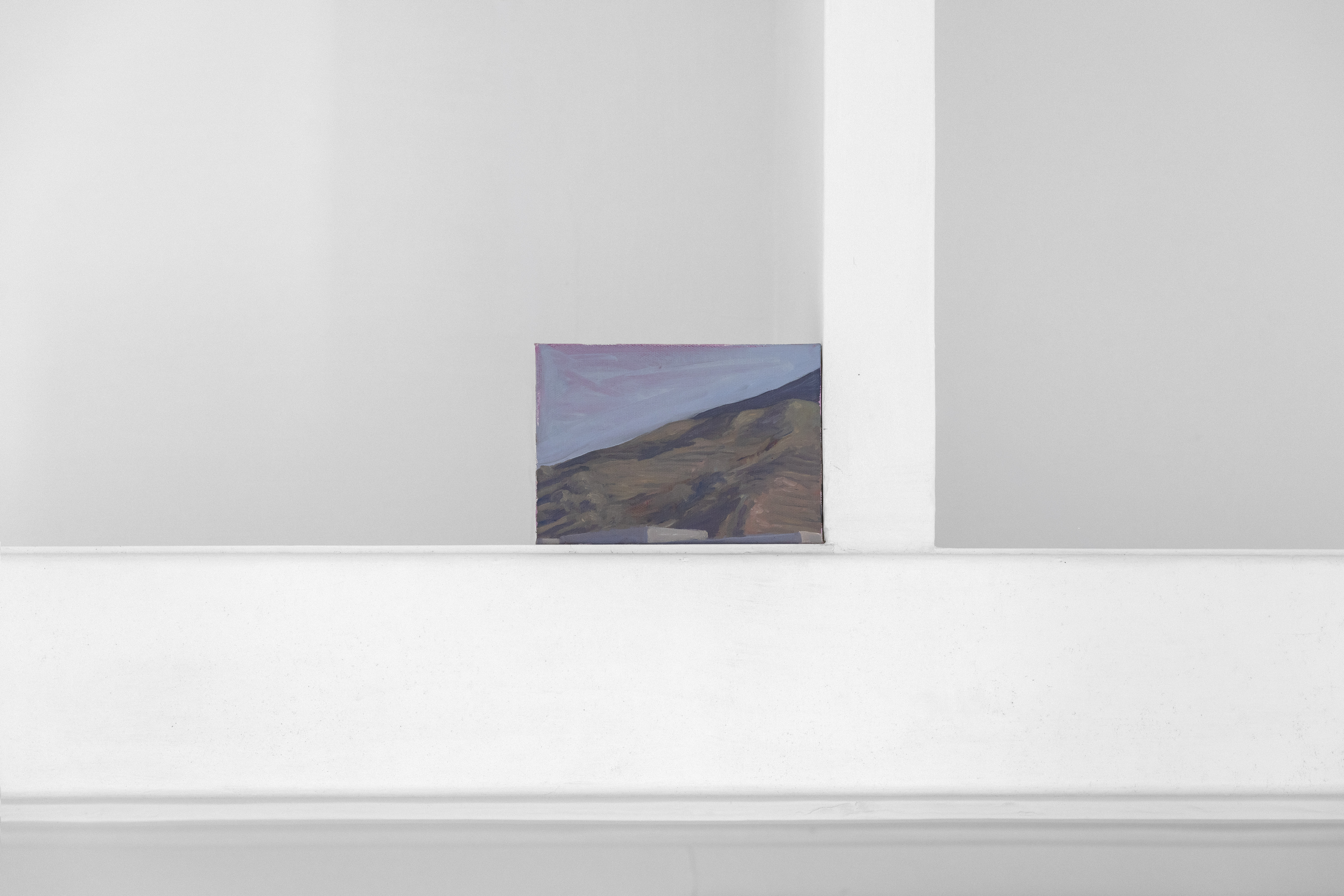
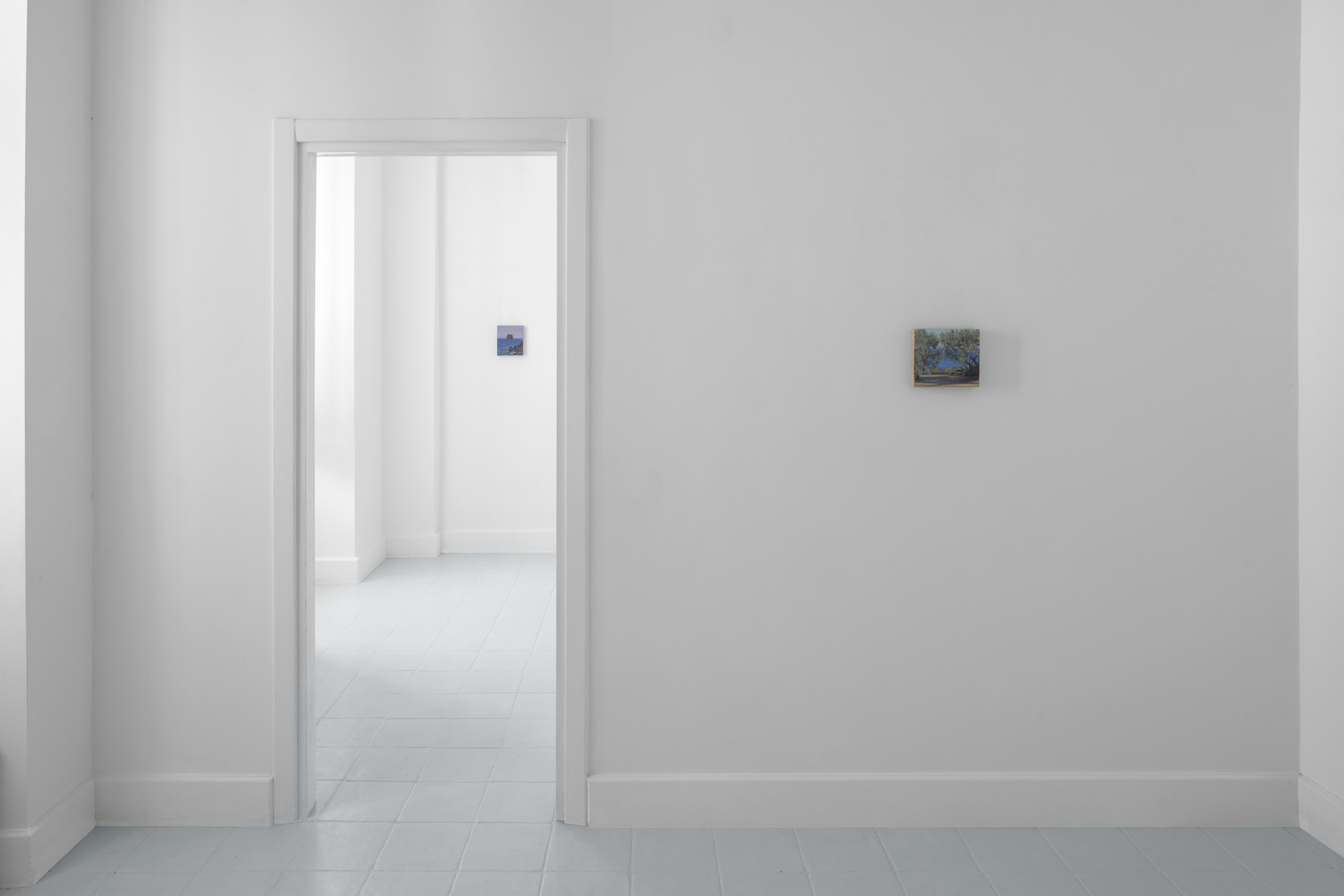
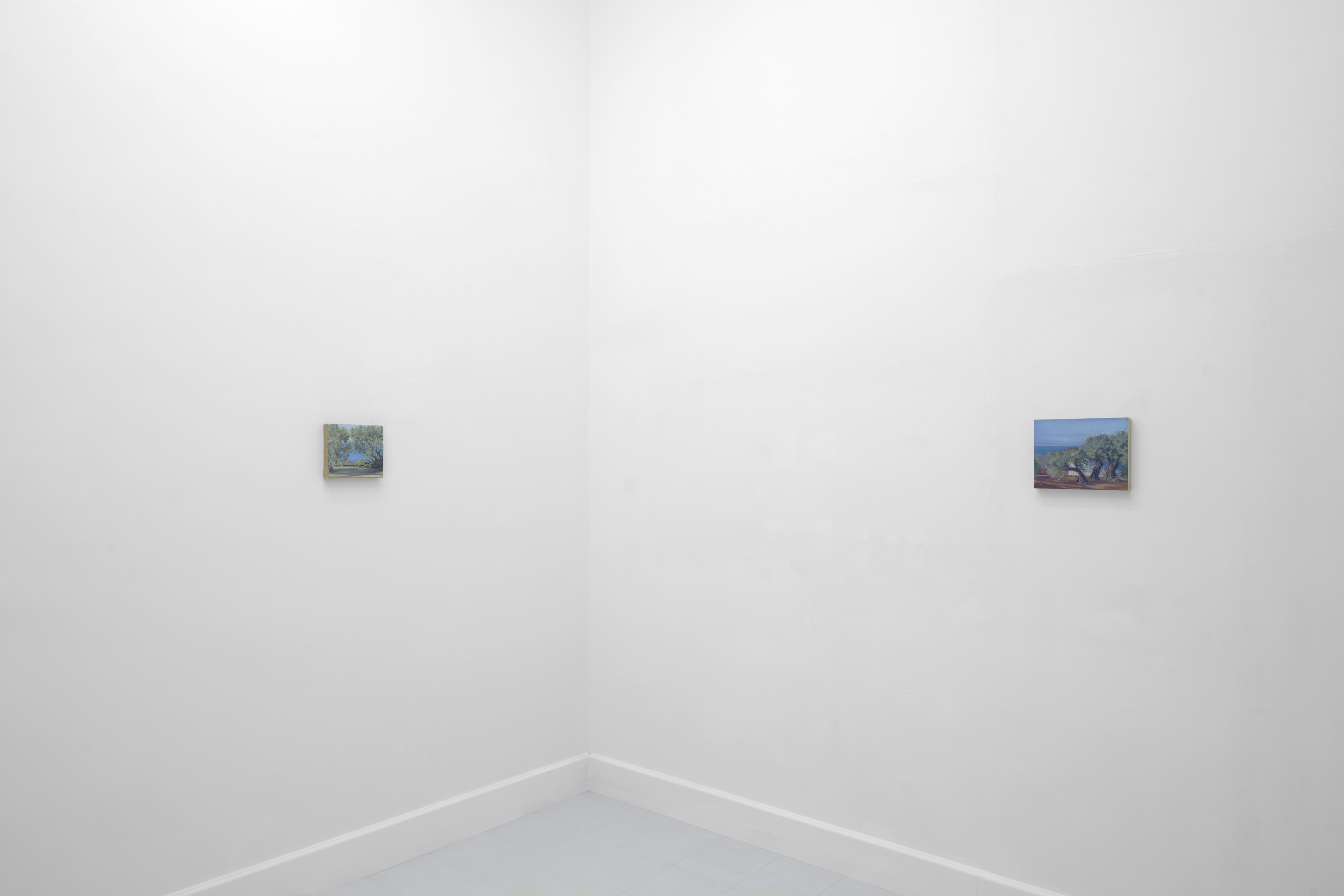
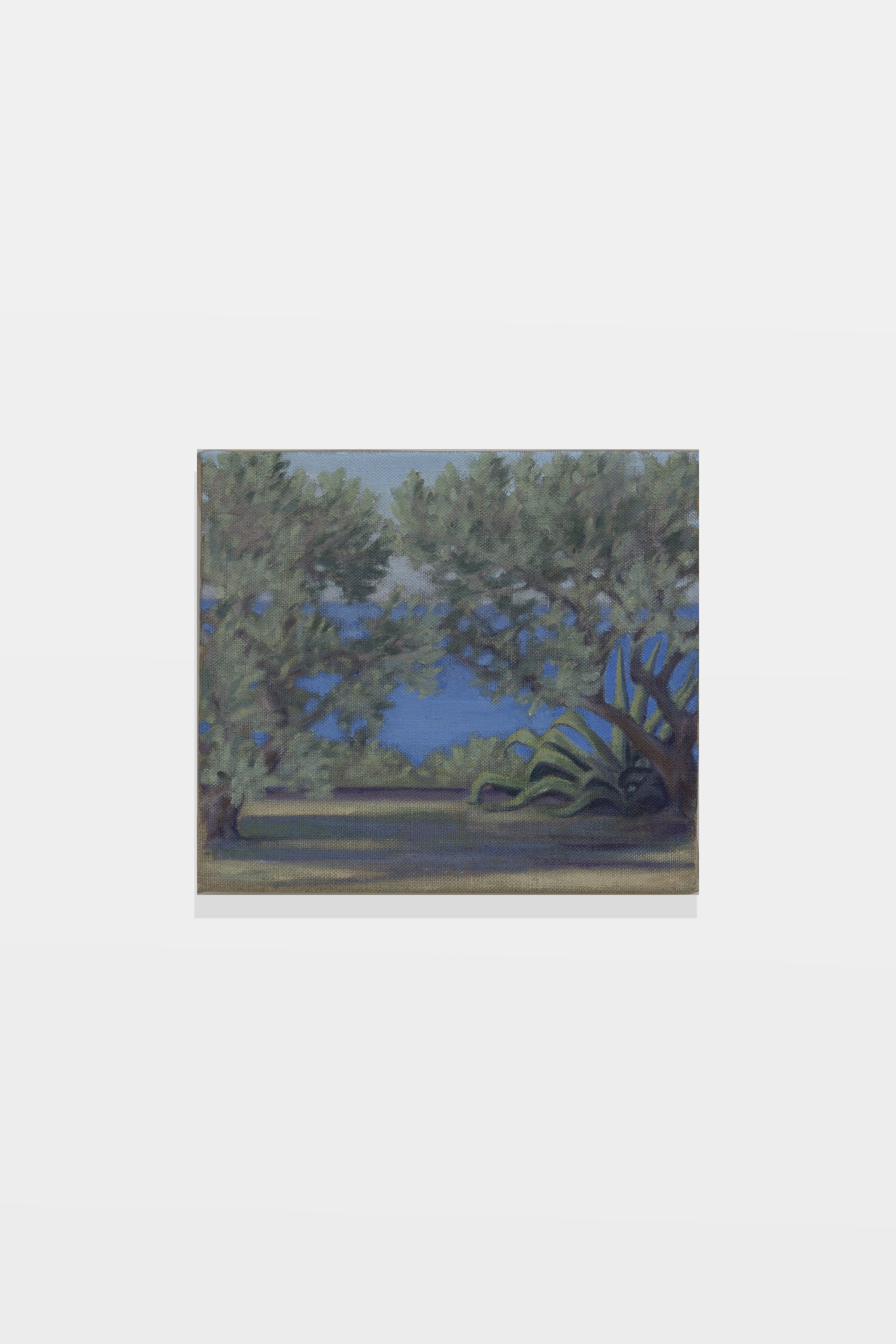
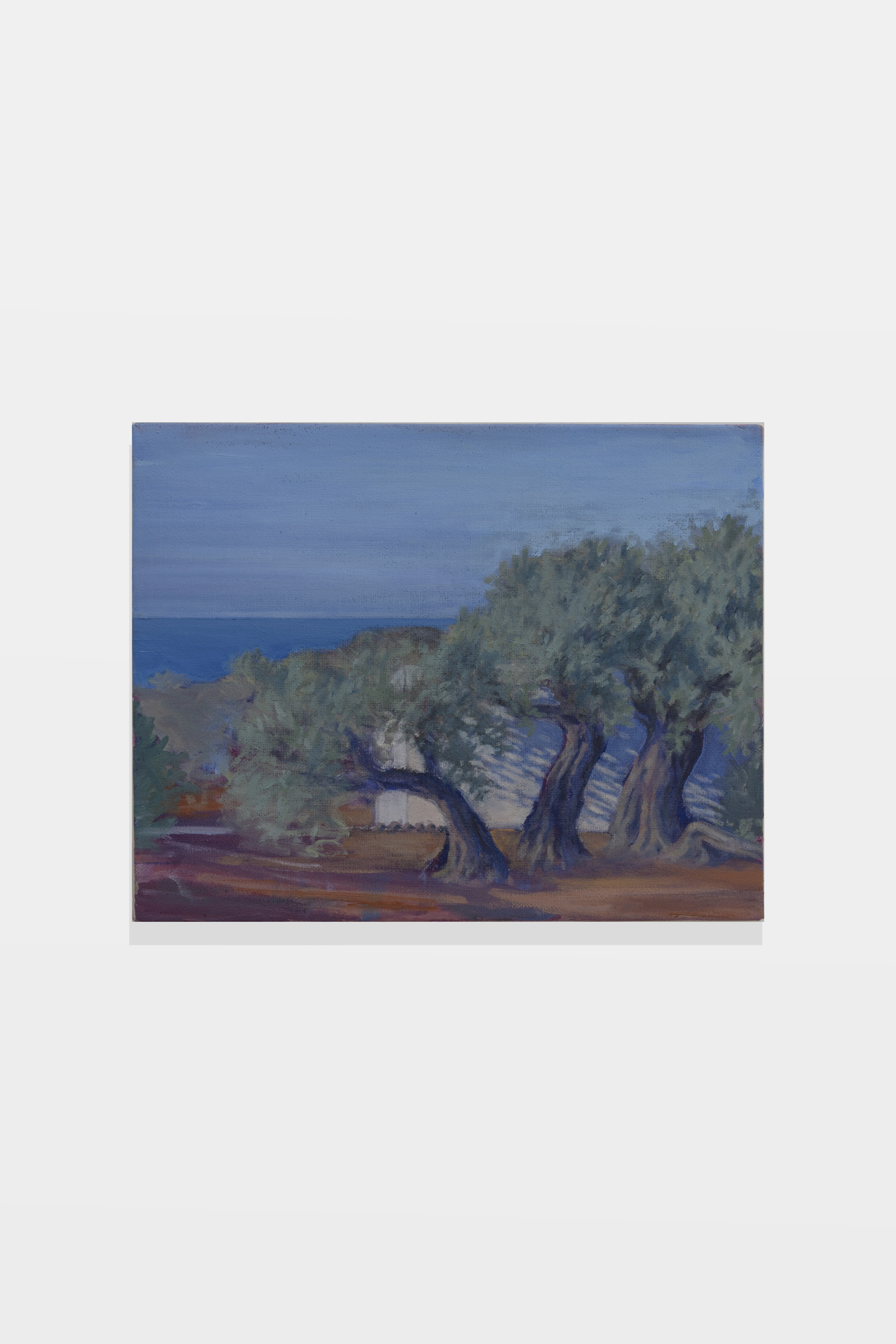
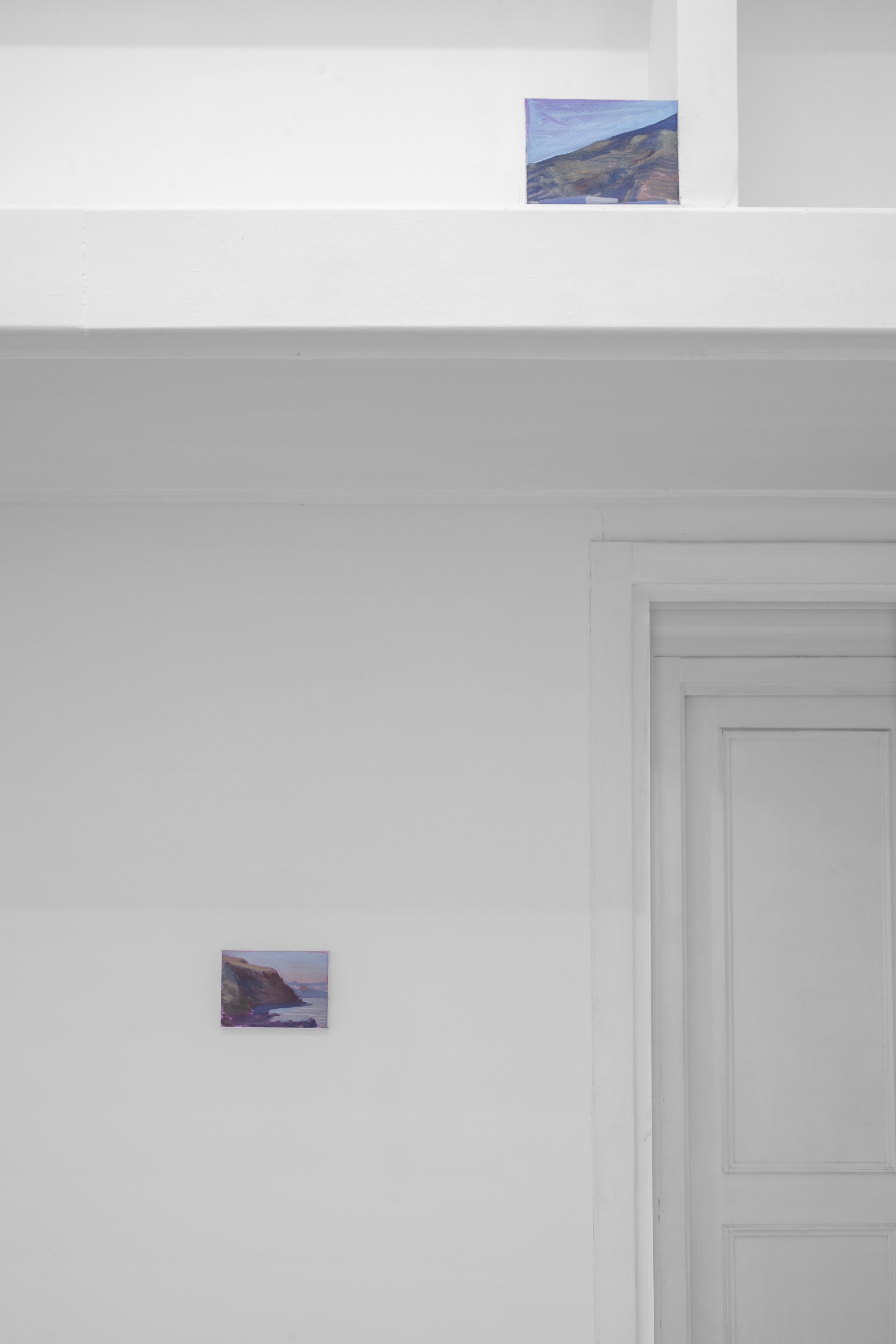
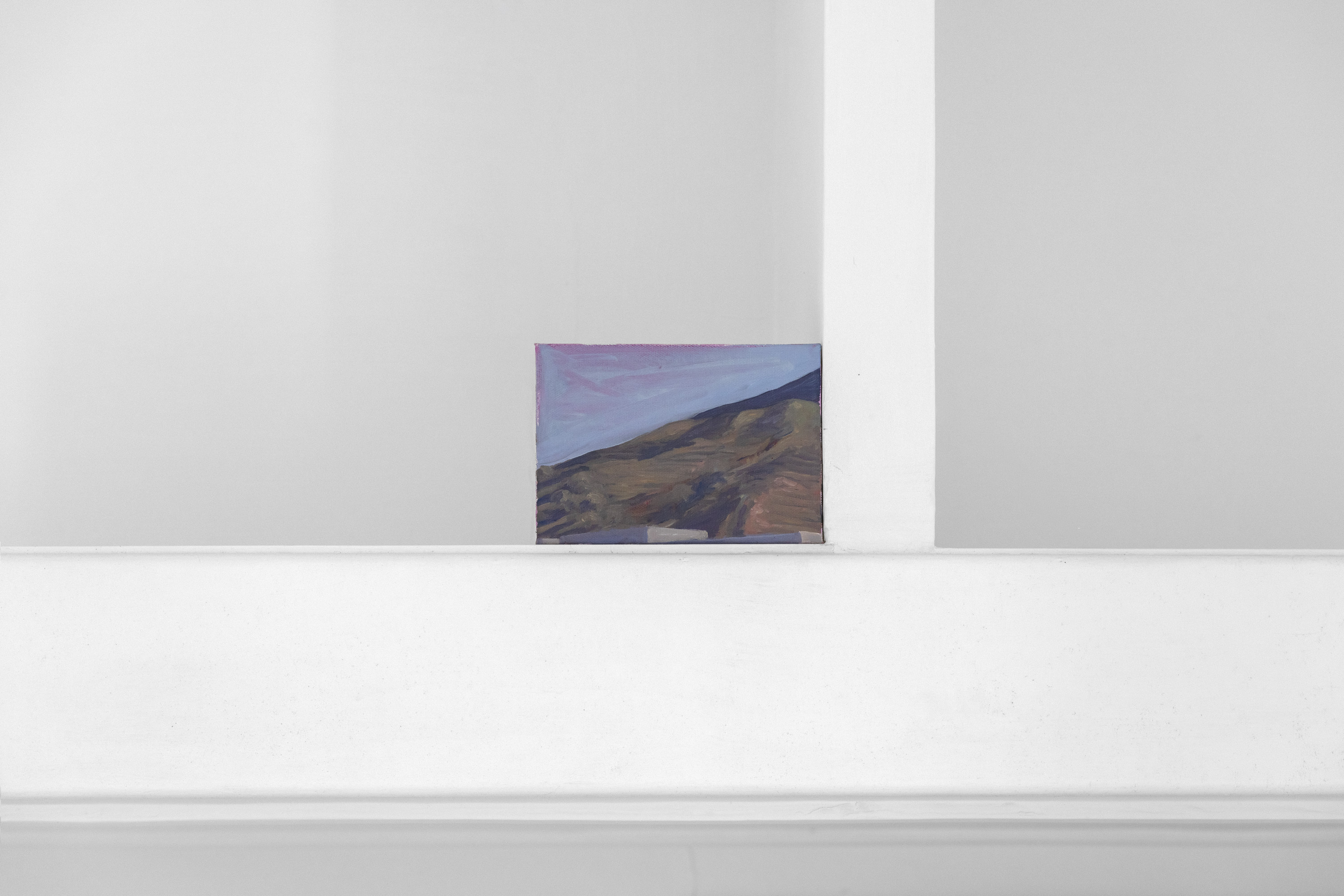
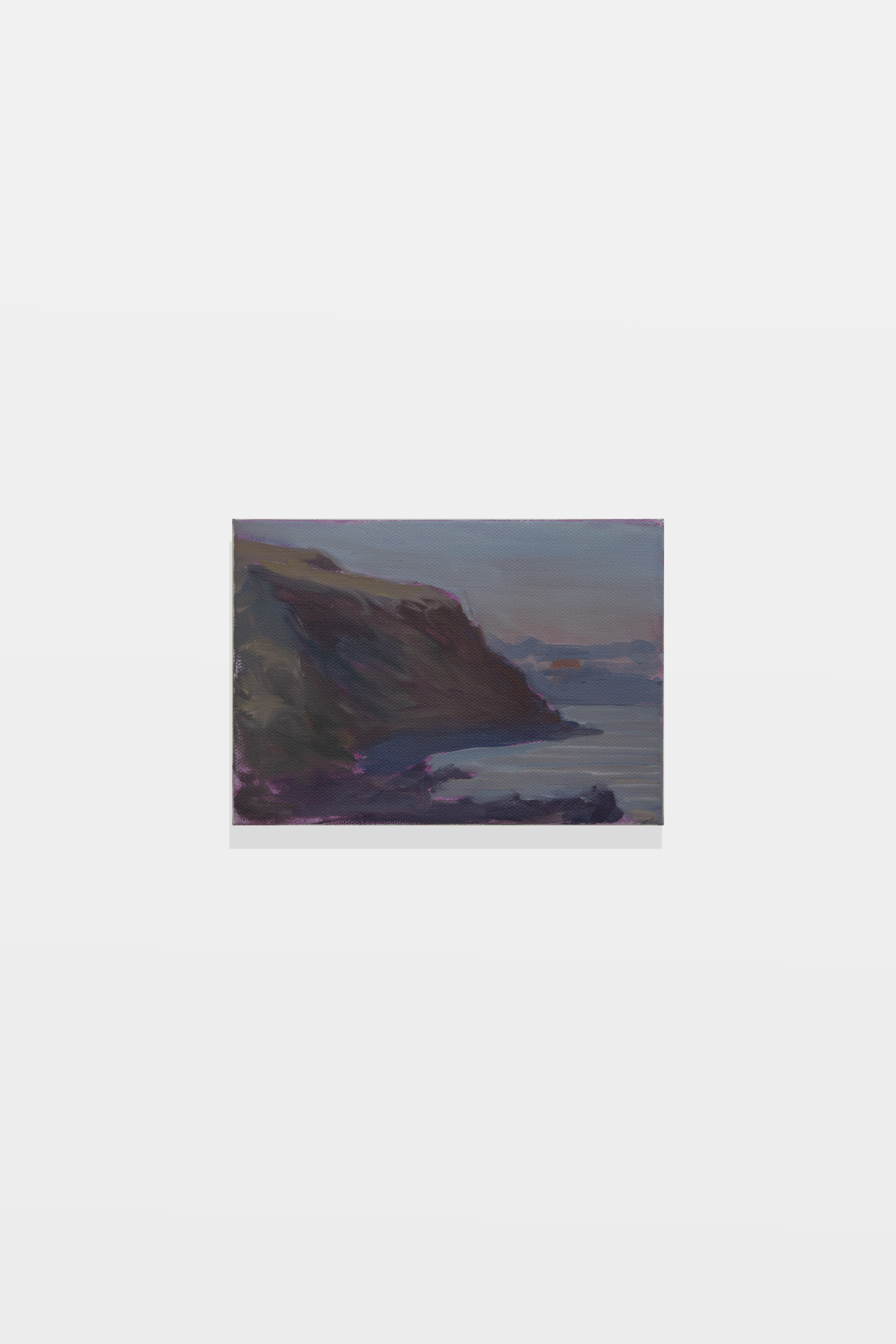
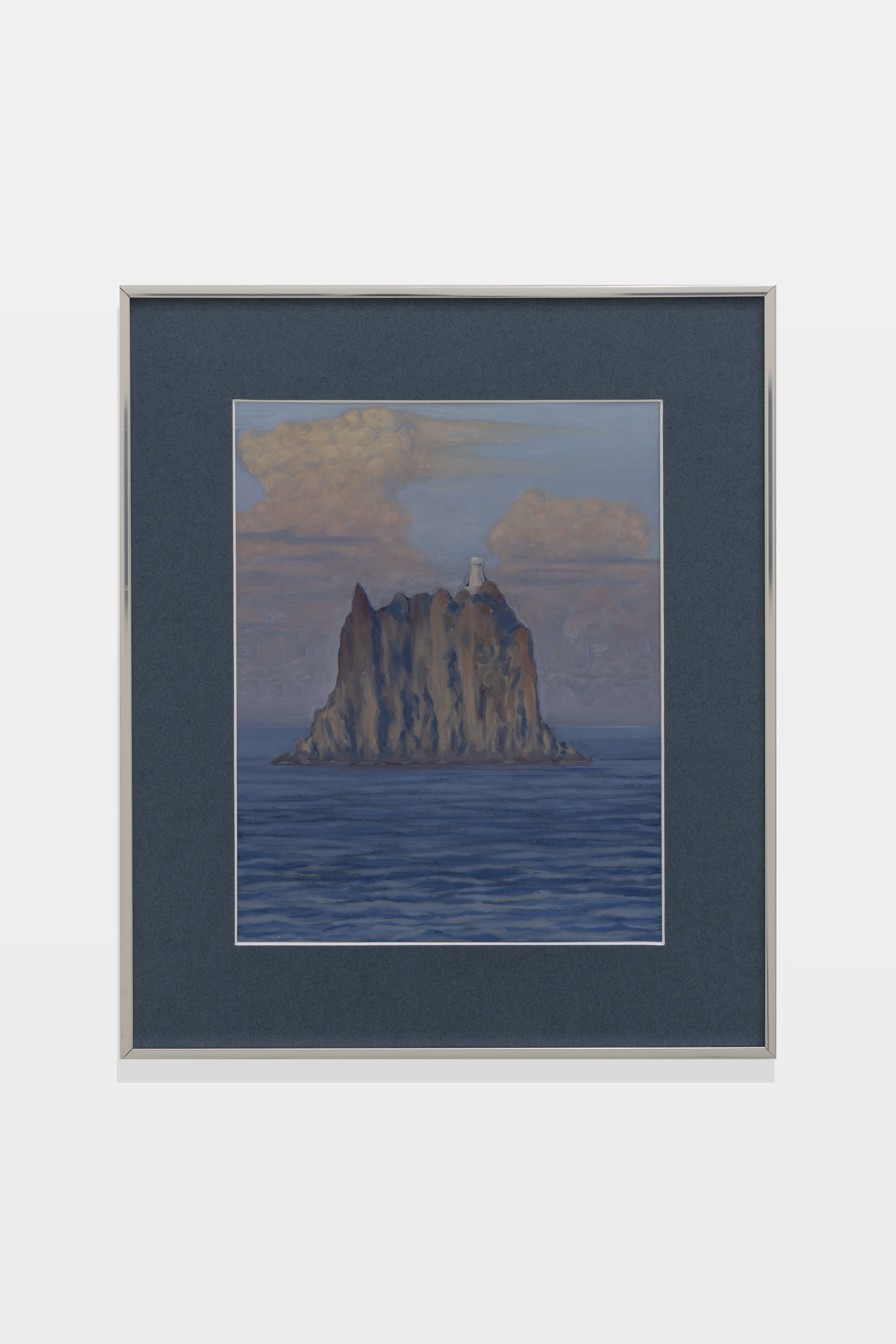
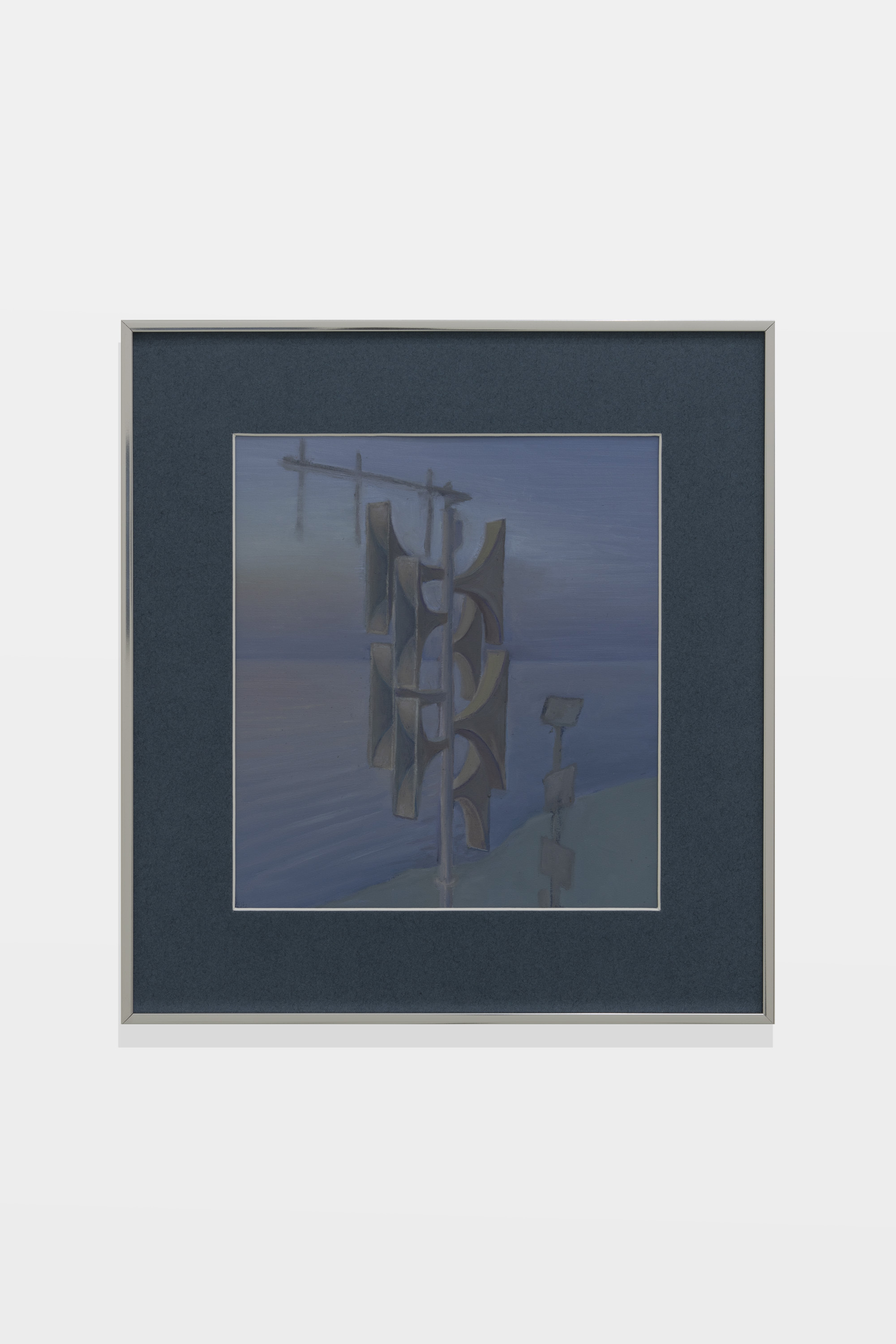
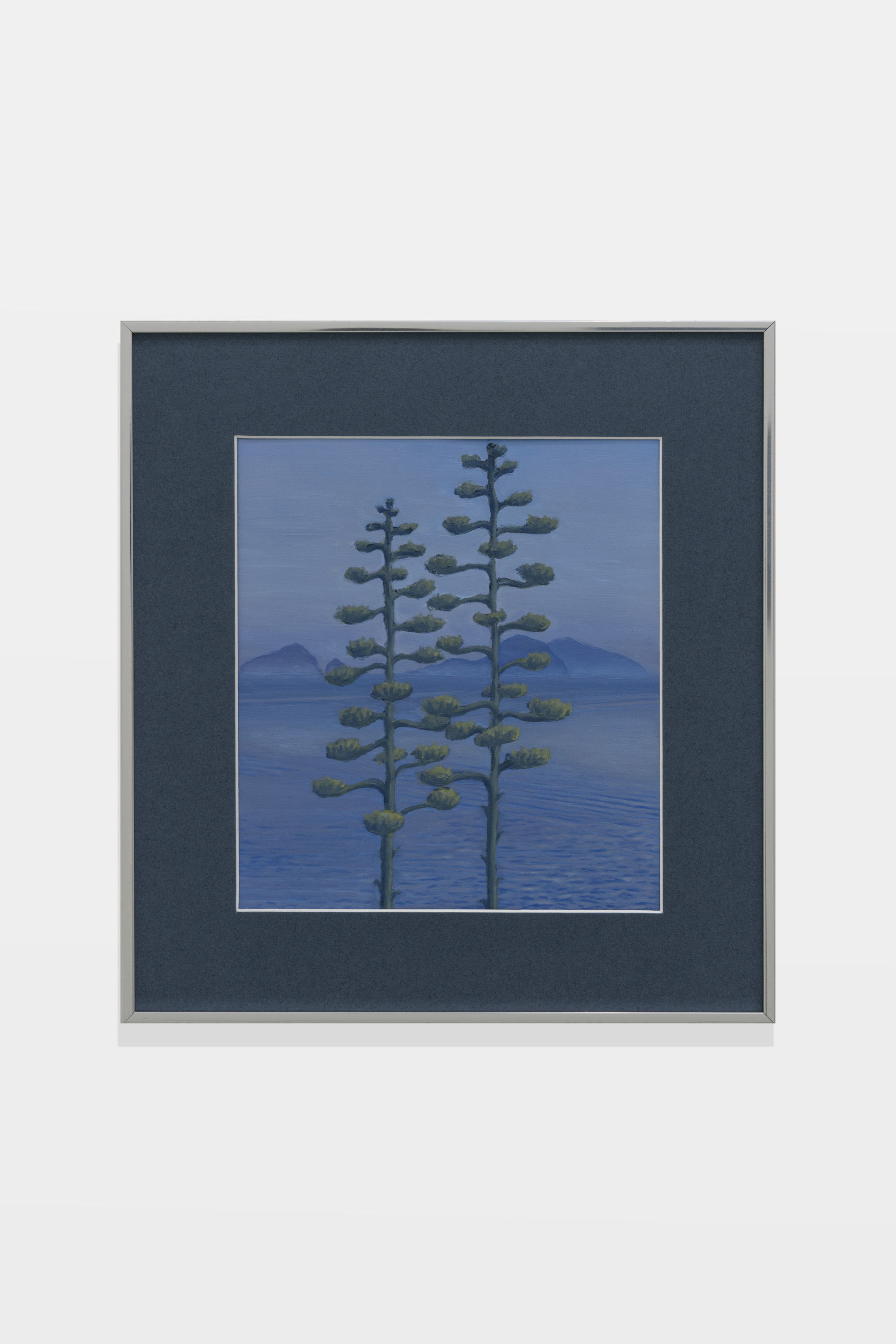
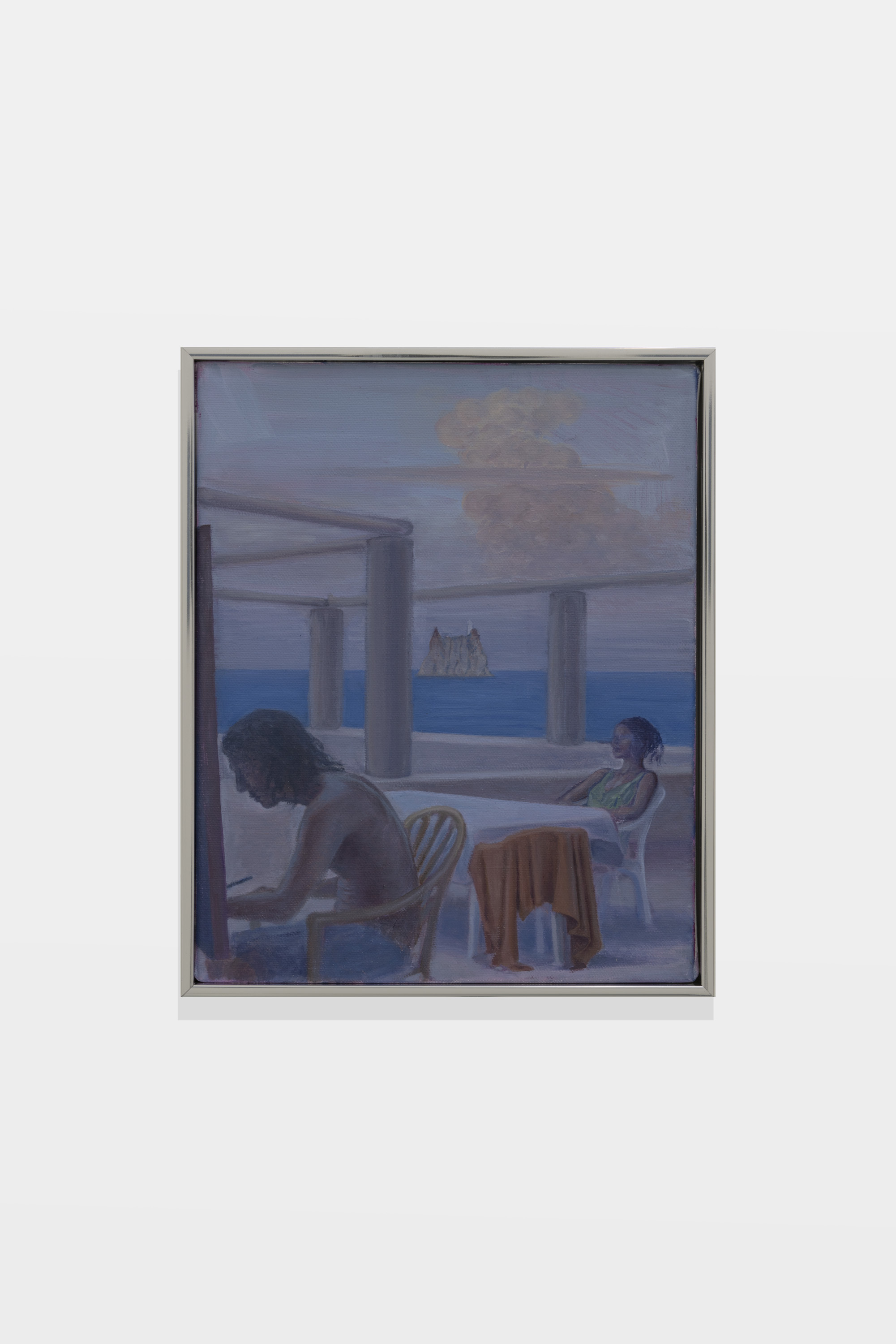
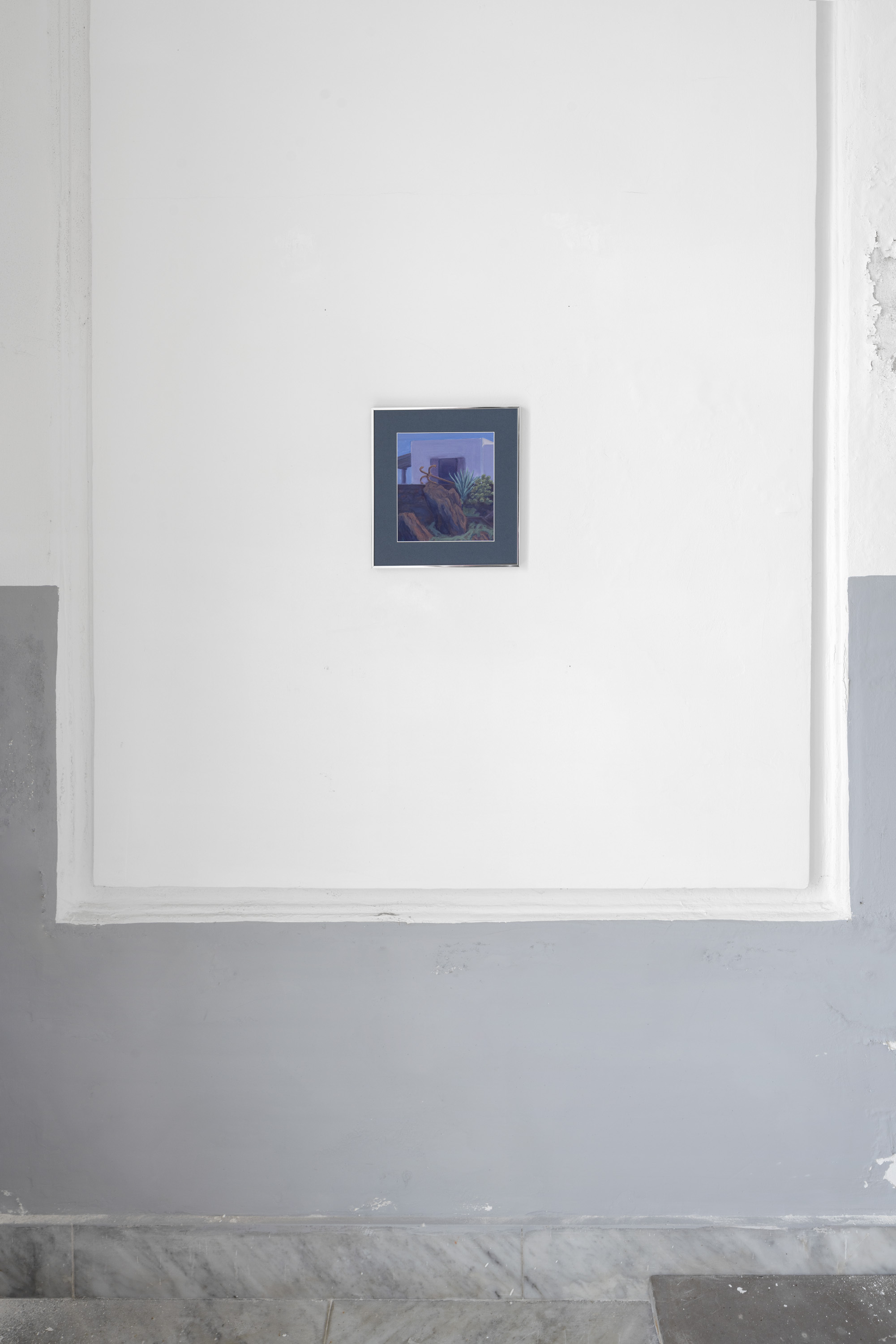
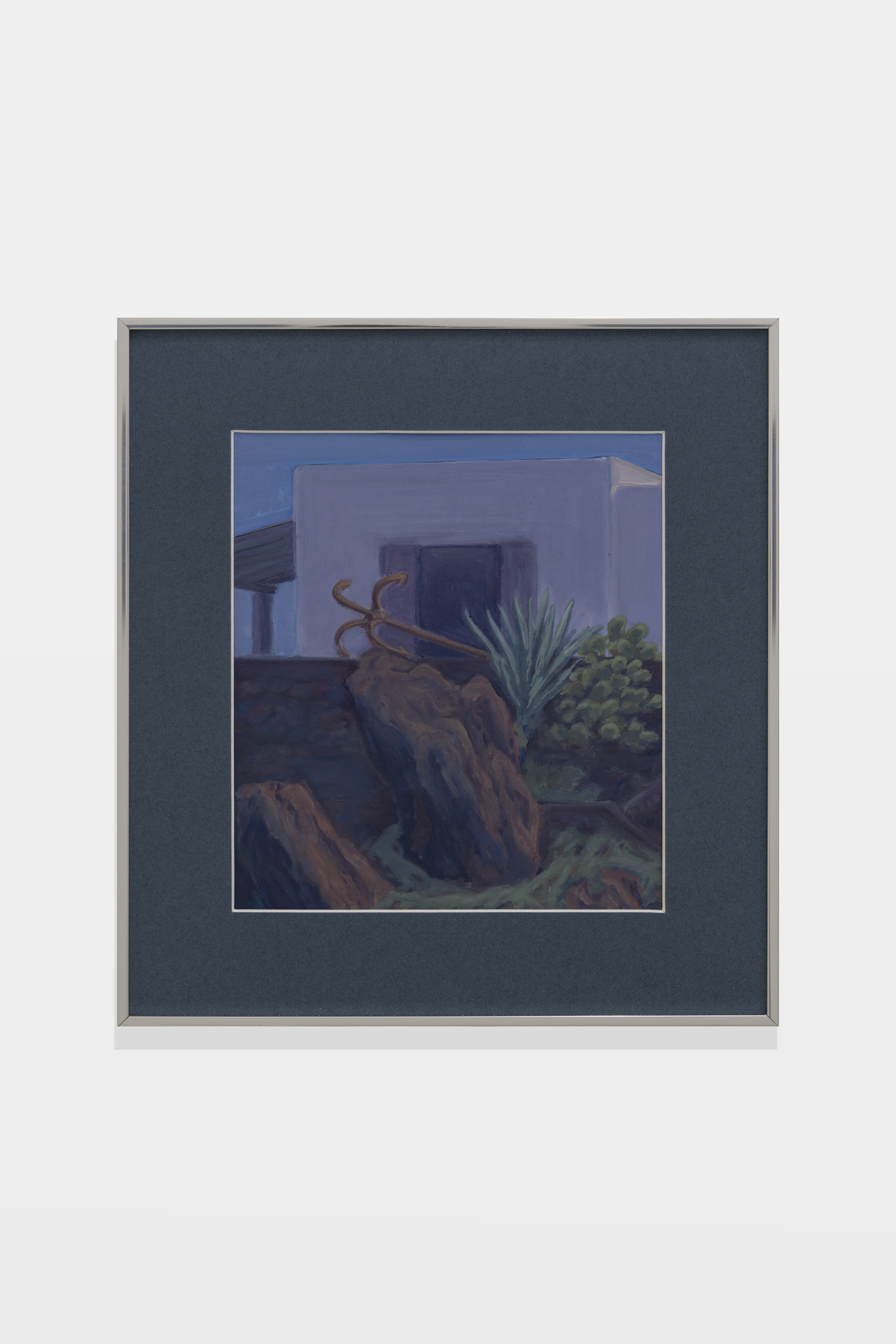
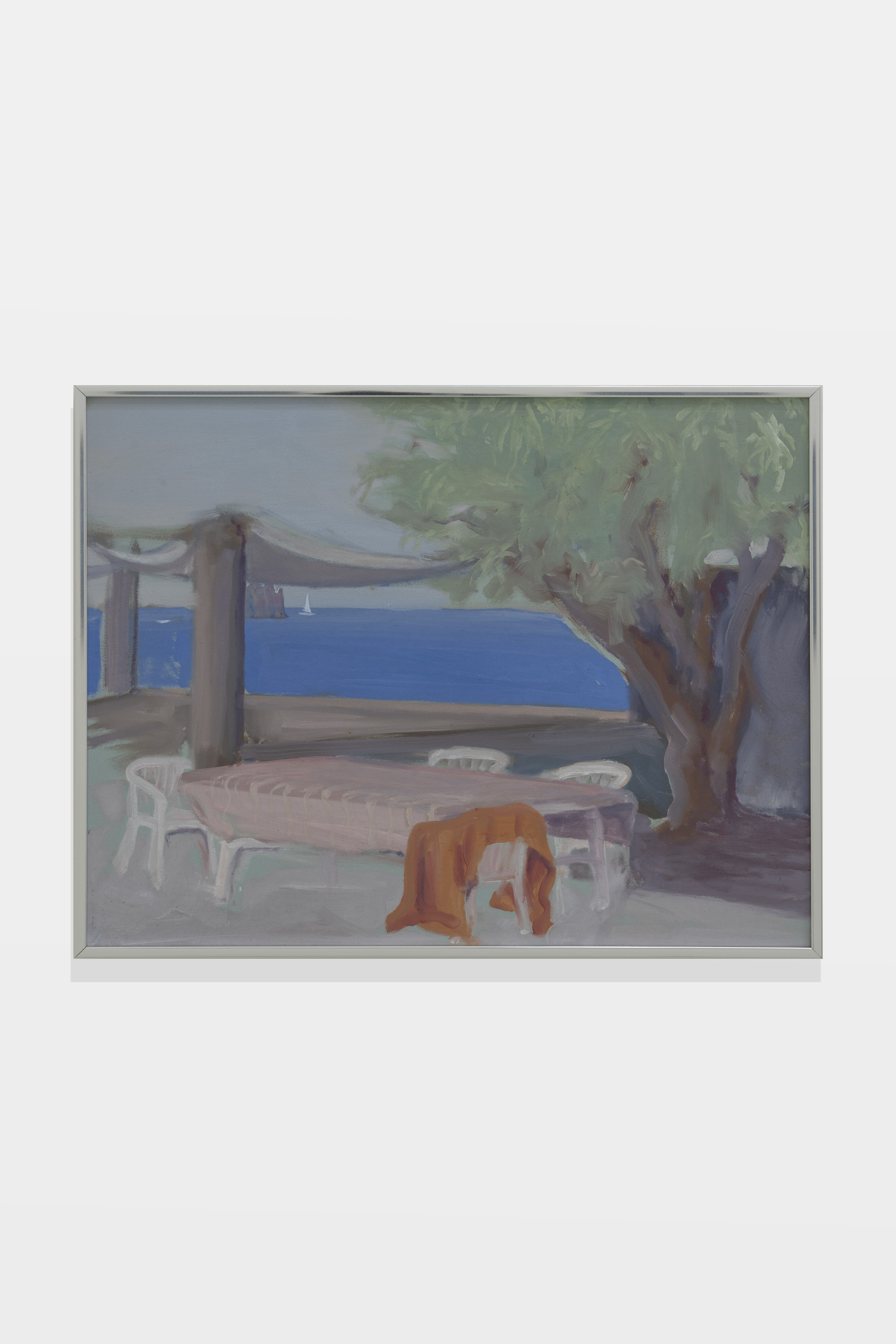
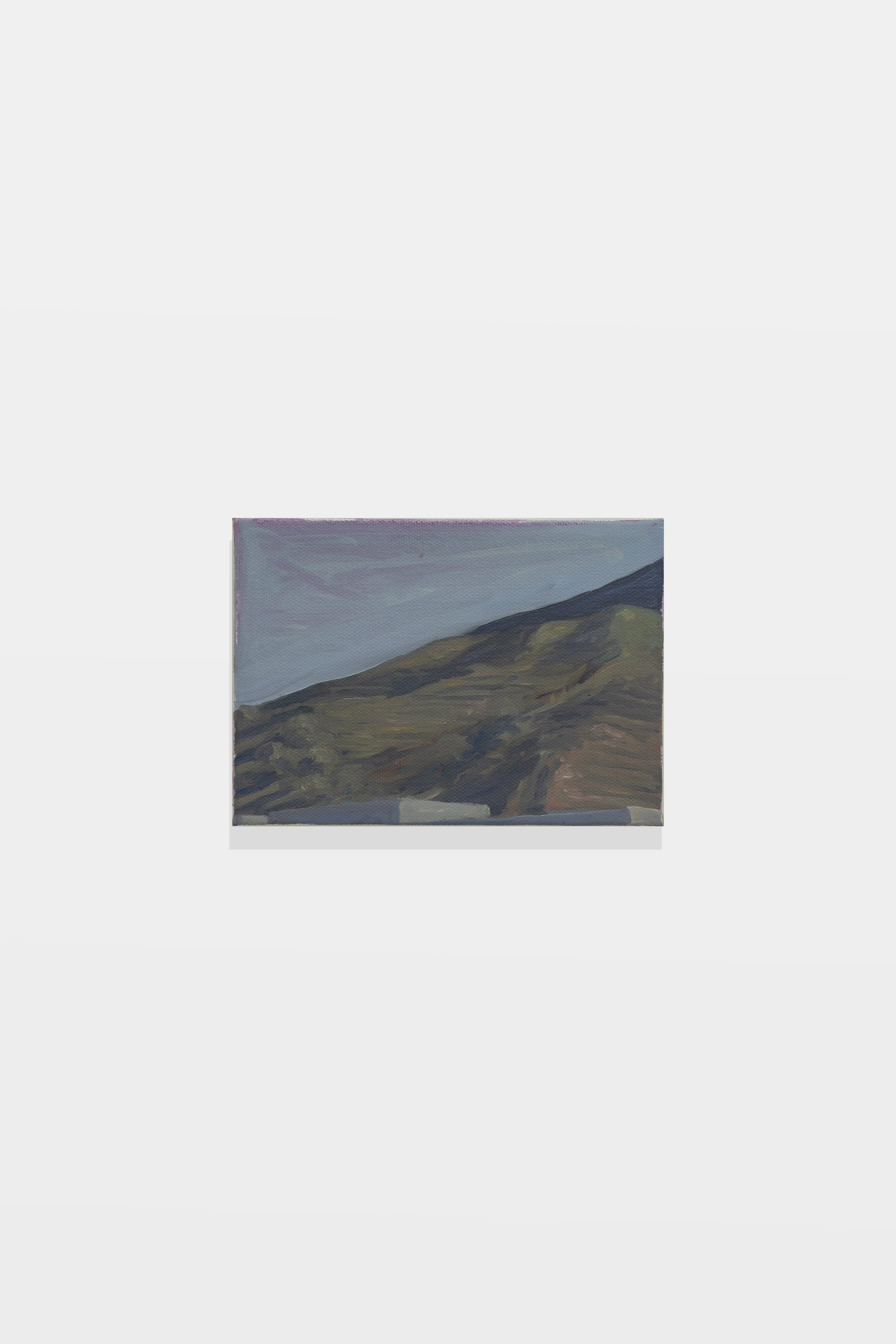
The paintings in L’heure entre chien et loup were made en plein air over the course of six weeks on the island of Stromboli. The French expression describes the uncertain hour of dawn or twilight, when the shifting light makes it difficult to distinguish a dog from a wolf. It evokes a moment of transformation in which familiar forms become strange and the boundaries between one thing and another begin to dissolve.
Upon arriving at one of the houses where she would stay on Stromboli, Fetter was warned that the neighbour kept a pack of dogs that were actually wolves. Rumour had it that one of them had bitten a child earlier that summer. Even tranquil swims in the sea beneath the house took place under the watchful gaze of the wolf-dogs on the terrace above.
The story offered a fitting metaphor for an island caught in its own state of constant transformation. Stromboli is a volcano, seemingly docile and threatening at once, a landscape of contrasts between fire and water, black sand and whitewashed buildings, barren rock and lush vegetation. The fantasy of an idle Mediterranean summer unfolds within an unruly physical environment, where tranquillity and danger coexist.
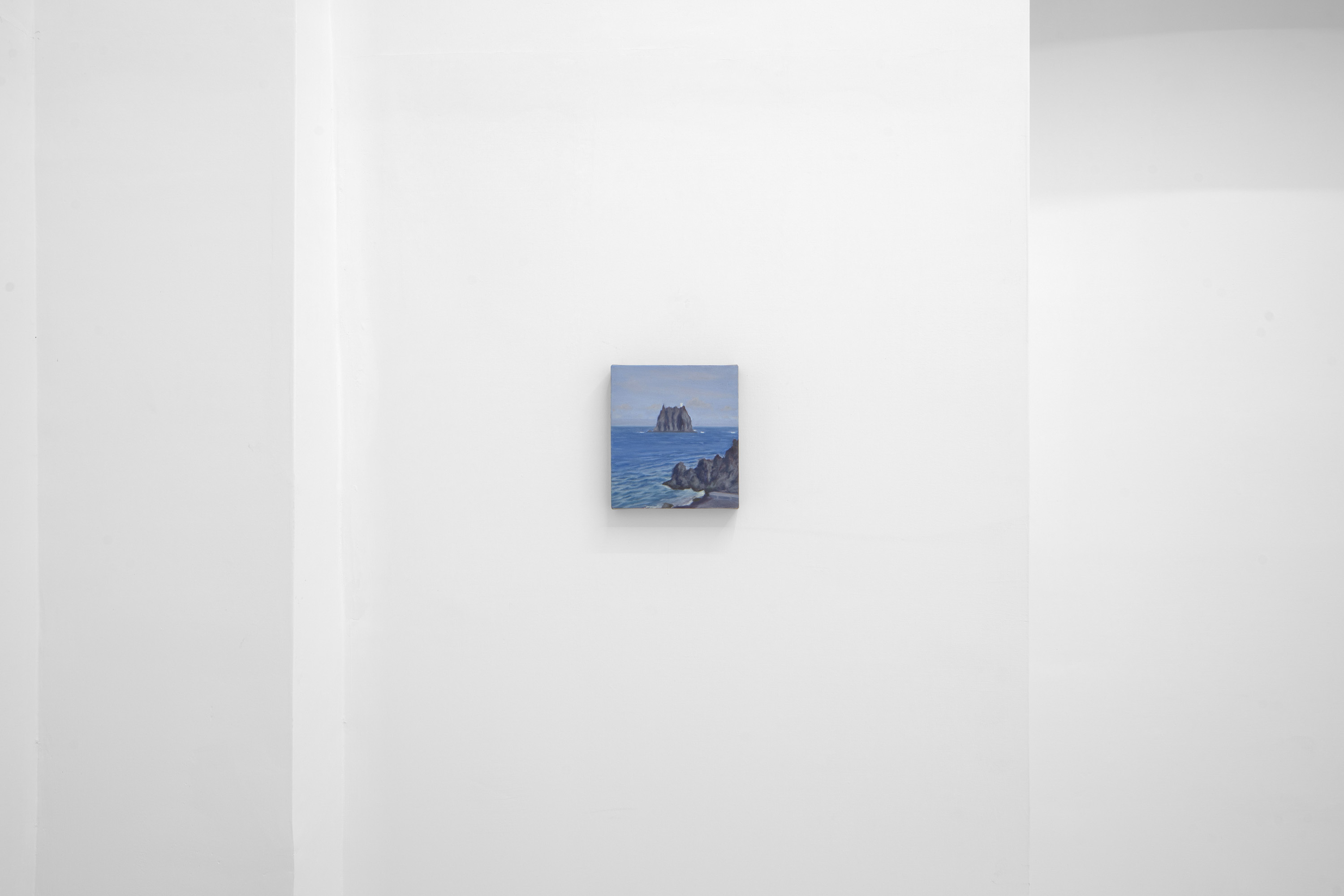
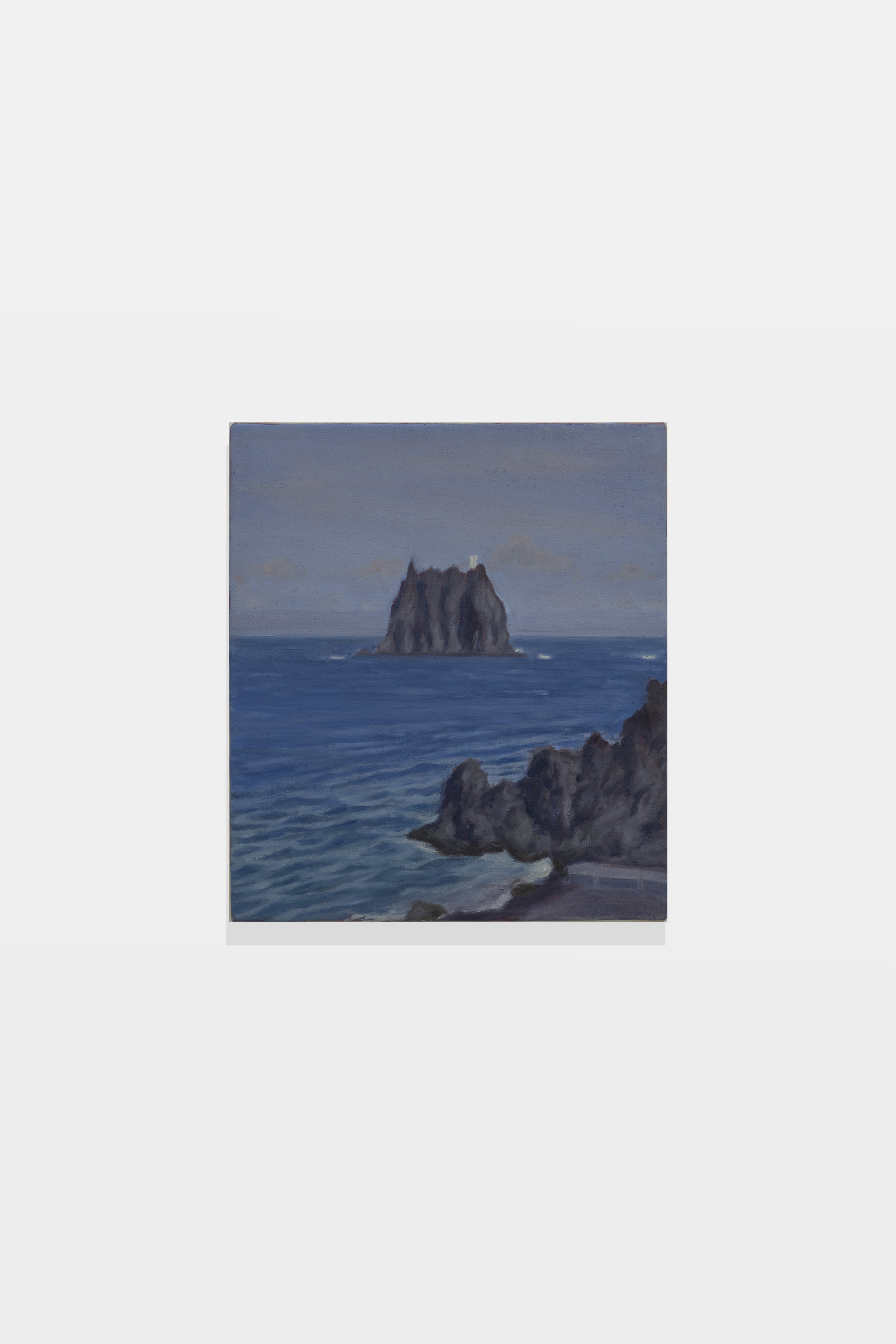
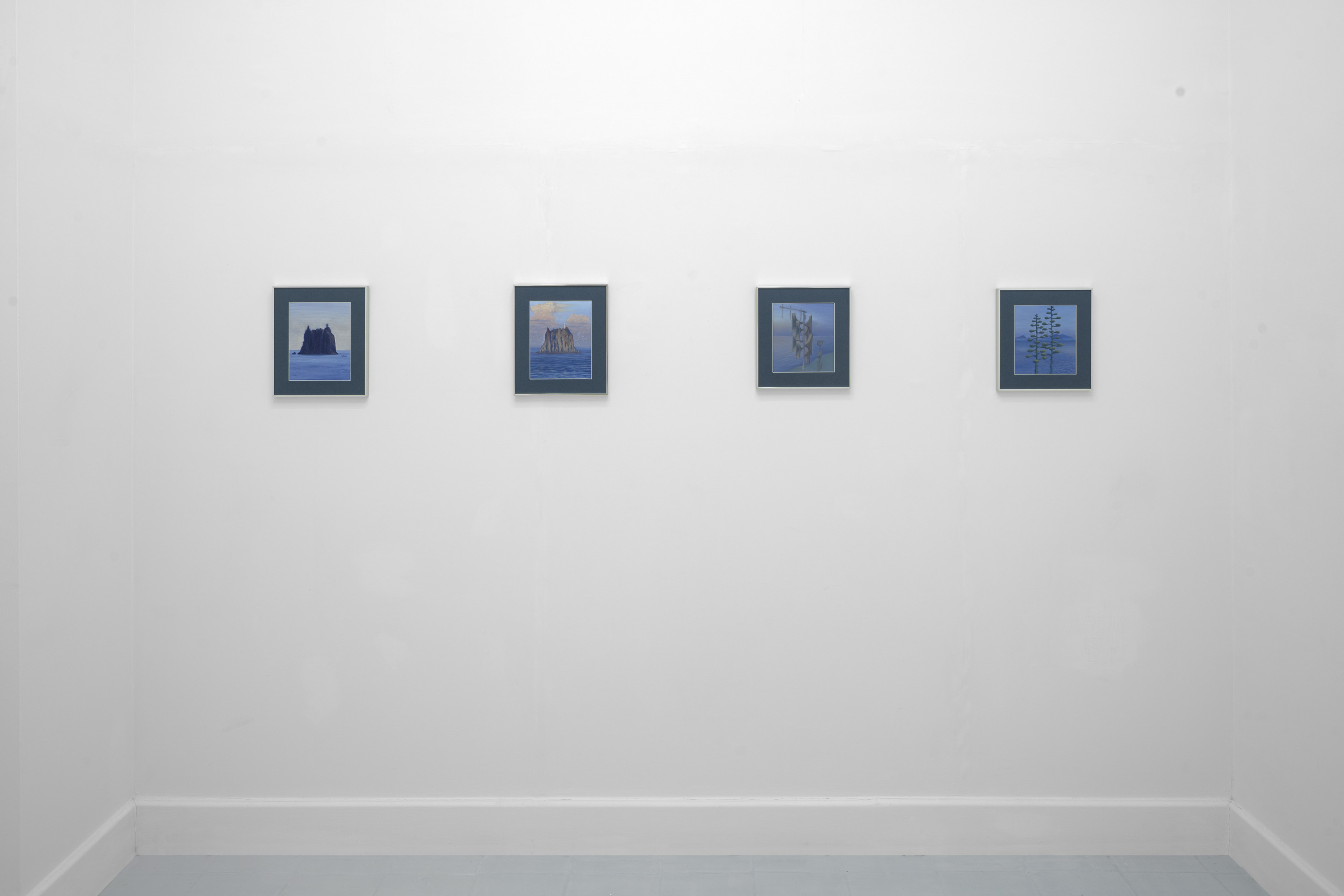
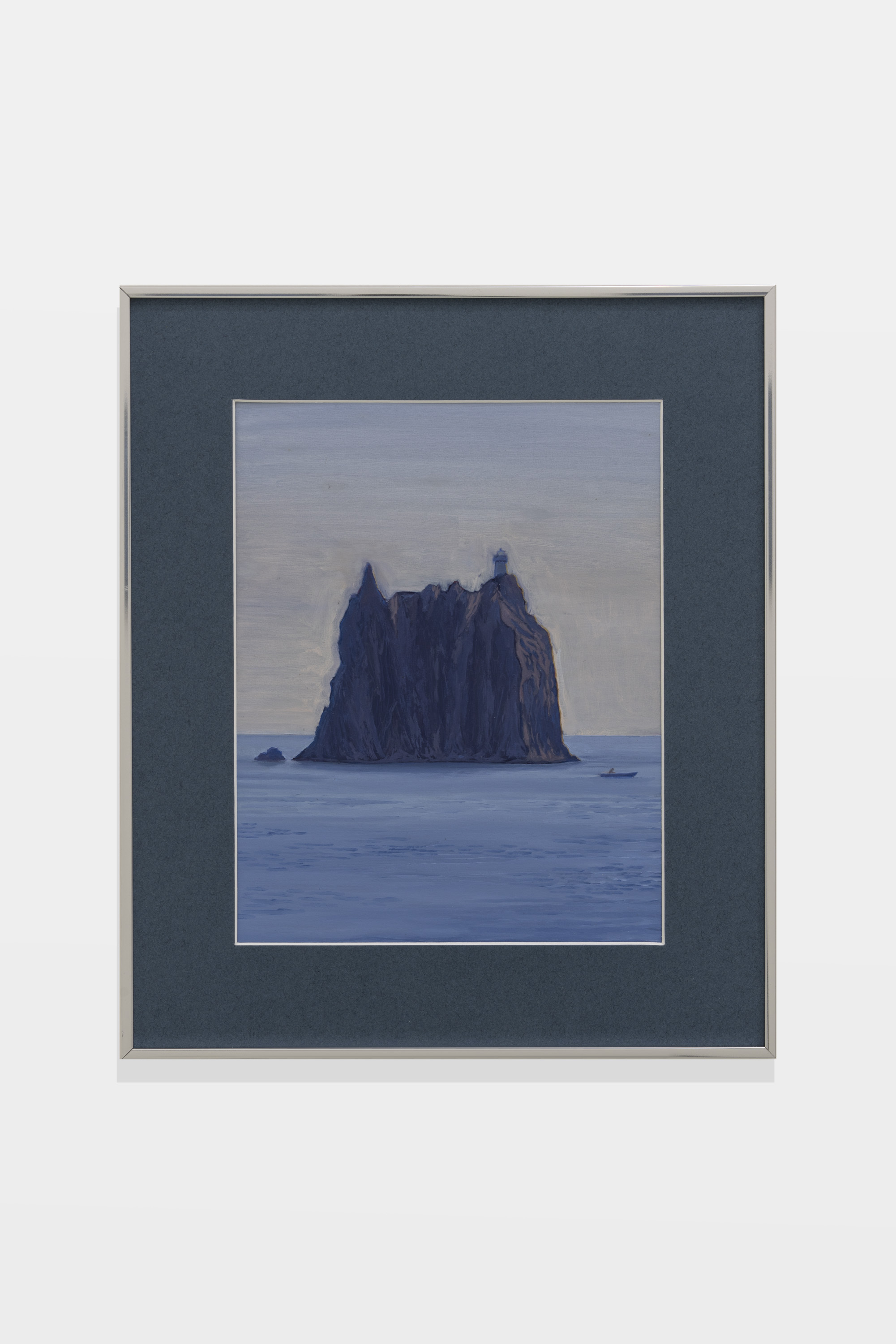
The paintings inhabit a similarly ambiguous territory. Their subdued blues and violets recall the diffused light of dawn and twilight, moments in which forms lose their clarity and colour becomes atmospheric. Fetter is attentive to the resemblances that emerge between seemingly unrelated things: the shape of an agave flower mirrored in the structure of a siren tower on the volcano, or Strombolicchio, the rocky island visible from her studio, whose dark morning silhouette recalls Arnold Böcklin’s Isle of the Dead, only to appear later in the afternoon glittering like a crown on the Tyrrhenian Sea. How does a single subject change according to the time of day? At what point does one thing begin to resemble another? These shifting perceptions suggest a landscape whose identity remains perpetually in flux.
The relationship between landscape and its prior representation had already acquired particular significance in Fetter’s encounter with the work of Paul Thek. During an earlier journey to Ponza, she retraced the artist’s time on the island, drawn by the intense cobalt and cerulean of the gouaches he had produced there. Her encounter with the landscape was thus mediated by another painter’s vision, establishing a dialogue between firsthand experience and the memory of an image.
The presentation of the Stromboli paintings in Naples expands this relationship into an earlier regime of visual circulation. The Neapolitan gouache, which flourished alongside the Grand Tour, translated the landscapes of Southern Italy into portable objects of memory and desire. Produced largely for foreign travellers, these paintings established a repertoire of recognizable views whose repetition contributed to the construction of a collective Mediterranean imaginary.
This history resonates with Fetter’s longstanding investigation into the circulation of images and their changing cultural currency. Her previous paintings have drawn upon widely reproduced photographs, from Princess Diana aboard a yacht to Britney Spears, Lindsay Lohan and Paris Hilton photographed together in a car. The familiar landscapes of the Grand Tour and the viral images of contemporary popular culture belong to distinct historical systems of circulation, each dependent upon repetition, recognition and collective desire.
As an American artist painting in Southern Italy today, Fetter inhabits the tension between firsthand experience, inherited pictorial conventions and the foreign gaze. What does it mean to represent a landscape whose image has circulated for centuries? How does the encounter with a place negotiate the expectations that precede it? Her six weeks on Stromboli bring these questions into the intimate timescale of painting, where repetition, changing light and the prolonged act of looking continually transform the relationship between an image and the experience from which it emerges. L’heure entre chien et loup occupies this uncertain interval between observation and projection, personal memory and collective imagination.
ITA
I dipinti di L’heure entre chien et loup sono stati realizzati en plein air nell’arco di sei settimane sull’isola di Stromboli. L’espressione francese descrive l’ora incerta dell’alba o del tramonto, quando la luce cangiante rende difficile distinguere un cane da un lupo. Evoca un momento di trasformazione in cui le forme familiari diventano estranee e i confini tra una cosa e l’altra iniziano a dissolversi.
All’arrivo in una delle case in cui avrebbe soggiornato a Stromboli, Fetter è stata avvertita che il vicino teneva un branco di cani che in realtà erano lupi. Si diceva che uno di loro avesse morso un bambino all’inizio di quell’estate. Perfino le nuotate tranquille nel mare sotto casa si svolgevano sotto lo sguardo vigile dei cani-lupo sulla terrazza soprastante.
Questa storia ha offerto una metafora calzante per un’isola catturata in un proprio stato di costante trasformazione. Stromboli è un vulcano, all’apparenza docile e minaccioso al tempo stesso, un paesaggio di contrasti tra fuoco e acqua, sabbia nera e edifci intonacati di bianco, roccia arida e vegetazione lussureggiante. La fantasia di un’oziosa estate mediterranea si svela all’interno di un ambiente fisico irrequieto, dove tranquillità e pericolo coesistono.
I dipinti abitano un territorio analogamente ambiguo. I loro toni smorzati di blu e violetto richiamano la luce diffusa dell’alba e del tramonto, momenti in cui le forme perdono la loro nitidezza e il colore diventa atmosferico. Fetter è attenta alle somiglianze che emergono tra cose apparentemente non correlate: la forma di un fiore d’agave rispecchiata nella struttura di una torre sirena sul vulcano, o Strombolicchio, l’isolotto roccioso visibile dal suo studio, la cui scura silhouette mattutina ricorda L’isola dei morti di Arnold Böcklin, per poi apparire più tardi nel pomeriggio luccicante come una corona sul Mar Tirreno. Come cambia un singolo soggetto a seconda dell’ora del giorno? In quale momento una cosa inizia a somigliarne a un’altra? Queste percezioni mutevoli suggeriscono un paesaggio la cui identità rimane perennemente in divenire.
Il rapporto tra il paesaggio e la sua rappresentazione pregressa aveva già assunto un significato particolare nell’incontro di Fetter con l’opera di Paul Thek. Durante un precedente viaggio a Ponza, l’artista aveva ripercorso il periodo trascorso lì dal pittore, attratta dall’intenso cobalto e ceruleo dei guazzi che vi aveva prodotto. Il suo incontro con il paesaggio è stato così mediato dalla visione di un altro artista, stabilendo un dialogo tra l’esperienza diretta e la memoria di un’immagine.
La presentazione dei dipinti di Stromboli a Napoli estende questa relazione a un regime di circolazione visiva antecedente. Il guazzo napoletano, fiorito di pari passo con il Grand Tour, ha tradotto i paesaggi dell’Italia meridionale in oggetti portatili di memoria e desiderio. Prodotti in gran parte per i viaggiatori stranieri, questi dipinti hanno stabilito un repertorio di vedute riconoscibili la cui ripetizione ha contribuito alla costruzione di un immaginario collettivo del Mediterraneo.
Questa storia risuona con la pluriennale indagine di Fetter sulla circolazione delle immagini e sul mutevole valore culturale che esse assumono. I suoi dipinti precedenti hanno tratto ispirazione da fotografie ampiamente riprodotte, da Principessa Diana a bordo di uno yacht a Britney Spears, Lindsay Lohan e Paris Hilton fotografate insieme in auto. I paesaggi familiari del Grand Tour e le immagini virali della cultura popolare contemporanea appartengono a sistemi storici di circolazione distinti, ciascuno dipendente dalla ripetizione, dal riconoscimento e dal desiderio collettivo.
In quanto artista americana che dipinge oggi nell’Italia meridionale, Fetter vive la tensione tra l’esperienza diretta, le convenzioni pittoriche ereditate e lo sguardo straniero. Che cosa significa rappresentare un paesaggio la cui immagine circola da secoli? In che modo l’incontro con un luogo negozia le aspettative che lo precedono? Le sue sei settimane a Stromboli portano queste domande nella dimensione temporale intima della pittura, dove la ripetizione, il cambiare della luce e l’atto prolungato dell’osservare trasformano continuamente il rapporto tra un’immagine e l’esperienza da cui essa emerge. L’heure entre chien et loup occupa questo intervallo incerto tra osservazione e proiezione, memoria personale e immaginazione collettiva.
Photo credits Maurizio Esposito